
The WELL Framework: Lead With Purpose
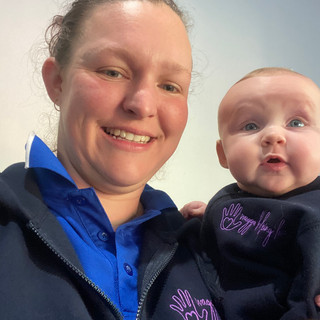
The WELL Framework is built on four interconnected pillars.
💙 Wellbeing First
💚 Empower Through Learning
💛 Lead With Purpose
💜 Lift Each Other Up
At The Educators Well, we believe these pillars are far more than professional concepts. They are stepping stones that support us not only as educators, but as people. Each pillar builds naturally upon the one before it, creating a journey that begins within ourselves before extending outward into the lives of those around us.
The first pillar, Wellbeing First, reminds us that we cannot continue pouring into others if our own well is running dry. It challenges the belief that constantly putting ourselves last somehow makes us better educators, parents, leaders, or people. Instead, it reminds us that caring for ourselves creates the foundation from which everything else can grow.
The second pillar, Empower Through Learning, invites us to look inward. It encourages us to become curious, not only about the world around us, but about ourselves. It asks us to explore our values, discover our strengths, recognise what gives us purpose, and understand who we are becoming. Along the way, we begin to realise that some of the most important learning we ever do has very little to do with qualifications and everything to do with life itself.
But eventually, that learning begins to ask something of us.
Once we understand ourselves more deeply, once we begin recognising what matters most, and once we have developed the confidence to trust our own values, another question naturally follows.
How do we live that?
How do we allow everything we have discovered about ourselves to influence the way we move through the world?
How do we ensure that our values are not simply things we believe, but things we demonstrate?
How do we become the kind of person we once needed ourselves?
For me, those questions sit at the heart of the third pillar.
Lead With Purpose.

Rethinking Leadership to Lead with Purpose
If I asked you to picture a leader, who would you see?
Before you read any further, I’d like you to pause for just a moment.
Close your eyes, if you like, and picture a leader.
Don’t overthink it.
Simply notice who comes to mind.
Perhaps you picture King Charles III, Queen Elizabeth II, Oprah Winfrey, or your Prime Minister. Or perhaps your mind doesn’t go to someone famous at all. Maybe you picture your school principal, the director of your early learning service, your manager, your church pastor, your football coach, or even someone from your own family. Whoever came to mind, I suspect there is one thing they all have in common.
We tend to associate leadership with the people who stand at the front.
For many of us, that image feels completely natural because it is the understanding of leadership we have been surrounded by for most of our lives.
From an early age, we are taught that leadership belongs to certain people. It belongs to those who hold positions of authority, who have climbed the organisational ladder, who have more experience, more responsibility, or more qualifications than everyone else. Leadership becomes something that is awarded. A destination we eventually arrive at after years of hard work.
Without even realising it, many of us begin to believe that leadership is something another person gives us permission to have.
I know I certainly did.
For much of my career, I believed leadership was something that happened later. It would come after enough experience, enough study, enough responsibility, and eventually, if I worked hard enough, someone would decide I was ready.
Looking back now, I realise I wasn’t waiting to become a leader.
I was waiting for permission.
Somewhere along the way, I had accepted the idea that leadership was something another person recognised in me, rather than something I chose to live every single day.
But life has a remarkable way of challenging the stories we tell ourselves.
As I worked across different roles, met different people, navigated personal challenges, and continued learning, I began noticing something that didn’t quite fit the picture I had always held of leadership.
Some of the people with the most impressive leadership titles struggled to inspire trust. They managed people, delegated tasks, and held authority, yet those around them often felt unheard, undervalued, or disconnected. People followed because they were required to, not because they genuinely wanted to.
At the same time, I met extraordinary people who had no formal leadership title at all. They were educators who quietly mentored new team members without ever being asked. They were parents who modelled kindness and integrity every single day. They were volunteers who gave generously of their time simply because they cared. They were colleagues who noticed when someone was struggling and chose to encourage rather than criticise.
More than anything, they were people who naturally left others feeling more confident, more capable, and more hopeful than they had before.
The more I reflected on those experiences, the more I realised that the people who had influenced my life most were rarely the ones with the biggest titles. They were the ones who consistently chose to live in a way that positively influenced the people around them.
That realisation completely changed the way I viewed leadership.
I came to understand that leadership and position are not the same thing. While a position may give someone authority, it does not automatically earn respect. It may give someone responsibility, but it does not guarantee influence. It may place someone in charge, but it does not necessarily make them a leader.
Over time, I realised that the people who had shaped my own life most profoundly were rarely the people with the biggest titles. They were the people who consistently chose integrity over convenience, encouragement over criticism, humility over recognition, and service over status. They led through the example they set, the conversations they had, and the way they made others feel.
That is when I began to understand something that has stayed with me ever since.
Leadership is not about the position you hold.
It is about the person you choose to become.
A position may open a door. It may invite people into your classroom, your workplace, your business, or your organisation. But your character determines whether people choose to walk that journey with you. Titles may create authority, but character creates trust. And trust is the foundation upon which real leadership is built.
True leadership is built over time through integrity, humility, consistency, courage, and the way we choose to treat people when nobody is watching. It is reflected in the promises we keep, the values we live by, and the quiet decisions we make every single day.
Perhaps that is why some of the greatest leaders you will ever meet may never call themselves leaders at all.
They simply choose, every day, to become the kind of person others can trust, respect, and willingly follow.
So What Does Leadership Really Mean?
The Oxford Dictionary defines leadership as “the action of leading a group of people or an organisation.” It defines to lead as “to guide or direct.” It defines purpose as “the reason for which something is done or created; a person’s sense of resolve or determination.”
Those definitions provide a helpful starting point, but I have come to believe they only tell part of the story.
Leadership is certainly about guiding people, but I don’t believe guidance begins with telling people what to do. I believe it begins with the example we choose to set. Every conversation we have, every decision we make, every challenge we face, and every interaction we share communicates something about who we are and what we value.
Whether we realise it or not, people are constantly learning from us. Children watch how we respond when things don’t go to plan. Colleagues notice whether we celebrate others or compete with them. Families observe whether our words align with our actions, and friends remember whether we listened with genuine presence or simply waited for our turn to speak.
Long before we ever hold a formal leadership position, people are learning from the way we choose to live.
Leadership is not something we switch on when we walk into a meeting.
It is something we practise every day through the choices we make and the values we choose to live by.
This is where the third pillar begins to look very different from the traditional understanding of leadership.
I think this is where purpose changes everything.
Purpose gives our leadership direction.
Without purpose, leadership can easily become about status, recognition, or control.
With purpose, leadership becomes an act of service.
It becomes less about asking, “How can I be successful?” and more about asking, “How can I make a meaningful difference?”
And perhaps that is why Lead With Purpose follows Empower Through Learning.
Before we can authentically influence others, we first need to understand ourselves. We need to know what we stand for, what matters most to us, and the kind of person we want to become. Without that foundation, it becomes easy to lead according to other people’s expectations rather than our own values. We begin chasing success instead of significance, recognition instead of relationships, and achievement instead of authenticity.
When leadership grows from purpose instead of position, something remarkable begins to happen. We stop trying to become impressive, and we start trying to become intentional. Our focus shifts away from proving ourselves and towards serving others. We become less concerned with whether people notice us and more concerned with whether our actions leave a positive impact on the people around us.
That is why I believe:
Leadership is not about the position you hold.
It is about the person you choose to become.
Every decision we make, every conversation we have, every challenge we face, and every opportunity to encourage another person becomes an expression of that purpose. Leadership is no longer something we switch on when we step into a particular role. It becomes woven into the way we live our lives, influencing our families, our workplaces, our communities, and every relationship we have.
Perhaps leadership was never about waiting for someone else to recognise us.
Perhaps it has always been about recognising the influence we already have and choosing to use it with purpose.
And perhaps that is where purpose begins.
Not with a title.
But with a decision.
Purpose Is Revealed
One of the questions I hear most often, both within education and beyond it, is, “How do I find my purpose?”
Sometimes the question is asked with excitement. Someone is standing at the beginning of a new chapter and wondering which path to take. Other times it comes from a place of uncertainty. A career has changed. Life has taken an unexpected turn. Something no longer feels quite right, and they are searching for direction.
I understand that question because I have asked it myself.
For many years, I believed purpose was something we eventually found. I imagined it was waiting somewhere in the future, hidden behind the next qualification, the next promotion, the next opportunity, or the next big decision. If I just kept working hard enough, learning enough, and saying yes to enough opportunities, one day everything would suddenly make sense.
Looking back now, I don’t believe purpose works that way.
I don’t think purpose is something we stumble across one day as though it has been hiding, waiting for us to discover it.
I think purpose is something that quietly reveals itself over time.
It is revealed through the experiences that shape us, the people we meet, the challenges we face, the questions we ask, and the lessons we choose to learn along the way. It is often only when we pause and look backwards that we begin to recognise the thread that has been weaving through our lives all along.
When I look back over my own journey, I can now see that thread with far greater clarity than I ever could while I was living it.
As a young educator, I simply wanted to make a difference in the lives of children and families. I loved watching children learn. I loved building relationships with families. I loved creating environments where children felt safe, capable, and valued. At the time, I didn’t see those experiences as part of a bigger picture. They were simply the work I loved doing.
Later came Family Day Care, mentoring educators, supporting services, and sharing ideas with others in the profession. Again, I wasn’t thinking about purpose. I was simply responding to opportunities as they appeared and following the things that genuinely mattered to me.
Then life changed.
Like so many people, I experienced seasons I never would have chosen for myself. There were moments that challenged my confidence, tested my resilience, and forced me to rethink the future I had imagined. There were chapters that felt more like interruptions than opportunities, and at the time I struggled to understand why they were happening.
If someone had told me then that those very experiences would become some of my greatest teachers, I don’t think I would have believed them.
Yet they did.
My workplace injury did not reveal a completely new purpose.
It deepened the one that had already been quietly growing for years.
Living with Post-Concussion Syndrome forced me to slow down in a world that celebrates being busy. It challenged my identity in ways I could never have imagined and asked me to redefine what success, productivity, and fulfilment really meant. It taught me empathy on a level that no qualification ever could, and it gave me a deeper understanding of what it feels like when life no longer looks the way you expected it to.
As difficult as that season has been, it also gave me something unexpected.
It gave me perspective.
It reminded me that behind every educator, every parent, every colleague, and every person we meet is a story we may know nothing about. It reminded me that compassion is not something we simply talk about; it is something we choose to practise every day. It reminded me that some of the most important work we will ever do is helping people feel seen, heard, and understood.
When I look back now, I don’t see isolated events.
I don’t see a collection of unrelated experiences.
I see a journey.
Working in early childhood.
Supporting educators.
Writing books.
Completing my TAE.
Learning to facilitate training.
Building a website.
Launching The Educators Well.
Creating the WELL Framework.
Moving interstate.
Starting again.
Recovering from injury.
Individually, none of those experiences seemed to explain my purpose.
Together, they tell a story.
Not because I carefully planned every chapter, but because each experience revealed another small piece of who I was becoming.
That is why I no longer believe purpose is something we find.
I believe purpose is something we uncover.
It grows quietly while we are busy living our lives. It reveals itself through the things that continue to capture our attention, the conversations we cannot stop having, the problems that stir something within us, and the people we naturally feel drawn to serve. More often than not, purpose is found in the intersection between our experiences, our values, and the difference we long to make in the lives of others.
I wonder how many times we overlook those clues because we are searching for something bigger.
Perhaps purpose has never been hiding.
Perhaps it has been patiently introducing itself all along.
Perhaps it has been present in the moments that made us feel most alive.
In the conversations we keep coming back to.
In the challenges that have shaped our character.
In the values we refuse to compromise.
In the people we feel called to encourage.
When we begin paying attention to those patterns, something remarkable happens.
We stop asking, “What should I do with my life?”
And we begin asking a much more meaningful question.
“Who am I becoming?”
Because perhaps purpose has never been about finding the perfect destination.
Perhaps it has always been about becoming the person we were created to be.
Leadership Begins Long Before a Title
One of the greatest misconceptions I have come to challenge over the years is the idea that leadership begins when someone gives us a title.
I no longer believe that.
I believe leadership begins long before anyone recognises it.
It begins in the ordinary moments of everyday life.
It begins when we choose integrity over convenience, even when nobody else is watching. It begins when we encourage a colleague who is doubting themselves, when we advocate for a child who cannot yet advocate for themselves, or when we choose to have a difficult conversation because we know avoiding it would ultimately cause more harm than good.
Leadership begins in the small decisions that rarely receive recognition.
As educators, I think we often underestimate just how much influence we already have.
Every day, children are watching us far more closely than we realise. They notice how we speak to one another, how we respond when things don’t go to plan, how we handle frustration, and how we celebrate success. They watch how we treat families, how we include others, and how we navigate conflict with kindness and respect.
Long before we intentionally teach children about kindness, resilience, empathy, or respect, they are learning those things simply by watching us.
Families are watching too.
Not because they expect perfection, but because they are trying to understand the people they trust with their children. They notice whether we greet them warmly, whether we genuinely listen, whether we communicate honestly, and whether our actions consistently reflect the values we speak about.
Our colleagues are watching.
Sometimes they are looking for guidance.
Sometimes they are looking for reassurance.
Sometimes they simply need someone to believe in them before they are able to believe in themselves.
Whether we realise it or not, we are constantly influencing the people around us.
That influence is leadership.
I often wonder how many educators have quietly been leading for years without ever recognising it.
Perhaps you are the educator who always makes time for the new team member, remembering what it felt like to be the one walking into an unfamiliar room for the very first time.
Perhaps you are the person who notices when a colleague is struggling and gently asks if they are okay.
Perhaps you are the educator who consistently advocates for children, even when those conversations feel uncomfortable.
Perhaps you are the person who celebrates other people’s successes instead of comparing yourself to them.
Perhaps you are the calm presence during difficult moments.
Perhaps you are the one who quietly reminds everyone why this profession matters.
None of those moments come with a promotion.
None of them appear on an organisational chart.
None of them require someone else’s permission.
Yet every one of them is an act of leadership.
I sometimes think we have unintentionally made leadership far more complicated than it was ever meant to be.
We have reduced it to job titles, organisational structures, performance reviews, and professional hierarchies, when perhaps leadership has always been something much simpler.
Perhaps leadership is simply the decision to leave every person, every conversation, and every situation better than we found it.
To encourage rather than discourage.
To build rather than tear down.
To listen before speaking.
To lead ourselves before attempting to lead anyone else.
To live in a way that reflects the values we hope to see in the world around us.
When I think back over the people who have had the greatest influence on my own life, very few of them would describe themselves as leaders.
Some were educators.
Some were mentors.
Some were friends.
Some probably have no idea how profoundly they shaped the person I have become.
What they all had in common wasn’t a title.
It was their character.
They consistently chose kindness.
They consistently chose integrity.
They consistently chose to invest in the people around them.
Looking back now, I don’t remember what position they held.
I remember how they made me feel.
I remember the confidence they helped build in me.
I remember the conversations that changed my perspective.
I remember feeling seen.
I remember feeling believed in.
And perhaps that is one of the greatest measures of leadership.
Not how many people report to us.
Not how many qualifications we hold.
Not how impressive our title sounds.
But whether the people who cross our path leave believing a little more in themselves than they did before they met us.
Because leadership was never meant to elevate ourselves.
It was always meant to elevate others.
And I think that is where this journey naturally begins to lead us next.
Once we begin understanding our purpose and recognising the influence we already have, something starts to shift.
Our focus slowly moves away from asking,
“How can I become a better leader?”
and towards a far more important question.
“How can I use my influence to help someone else grow?”
Perhaps that is where leadership reaches its fullest expression.
Not when people begin following us.
But when the people around us begin discovering the confidence to become leaders themselves.


Comments